Why the best national park road trip is shorter than you think
Three hours of driving, a stop every three hours, and parked by 3 p.m. That is the 3-3-3 rule, and it is the single most useful piece of advice I can hand you before we talk about a single park. Most people plan a national park road trip like a spreadsheet exercise: maximize miles, minimize sleep, collect as many entrance signs as possible. Then they come home wrecked and vaguely resentful.
I learned this the hard way in 2023, when I tried to squeeze Zion, Bryce, Capitol Reef, Arches and Canyonlands into six driving days. I drove 1,400 miles, saw five parks, and genuinely remember two of them. The rest is a blur of parking lots and gas station coffee. Since then I've re-planned that same trip twice, cut the mileage by roughly 40%, and enjoyed it about four times as much.
So if you're mapping out top national parks to explore on a road trip, the real question isn't which parks. It's how many you can actually absorb without turning the whole thing into a commute.
Key Takeaways
- The 3-3-3 rule (max 3 hours driving, a break every 3 hours, parked by 3 p.m.) prevents the exhaustion that ruins most park trips.
- Distances between Western parks are far bigger than they look on a screen. Zion to Bryce is 90 minutes; Zion to Arches is nearly 6 hours.
- Timed-entry reservations and seasonal road closures now decide your itinerary more than your preferences do.
- Fewer parks, more days each. Four parks in ten days beats eight parks in ten days, every time.
- Zion wins on drama and crowds; Bryce wins on quiet and strange, alien scenery. They're 90 minutes apart, so do both.
What is the 3-3-3 rule for road trips?
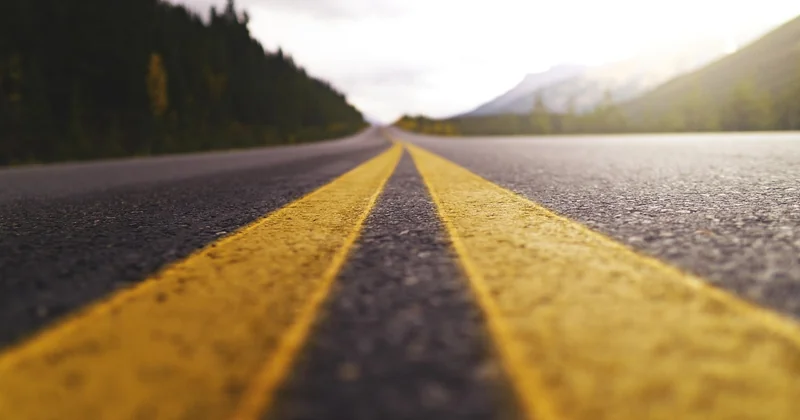
The 3-3-3 rule says you should drive no more than three hours between stops, take a break roughly every three hours, and be parked at your destination by 3 p.m. It isn't a law and nobody enforces it. It's a pacing guideline that keeps you sharp, keeps your passengers sane, and gets you to camp or a hotel while there's still daylight to set up.
Why the 3 p.m. cutoff matters more than the rest
Everyone focuses on the driving limit. The arrival time is the part that changed my trips. Pulling into a campground at 6 p.m. means setting up in fading light, cooking in the dark, and skipping whatever sunset viewpoint you drove eight hours to see. Pulling in at 3 p.m. means a shower, a walk, and a proper evening.
My rule of thumb now: I plan the day backwards from 3 p.m., not forwards from sunrise. Sounds small. It isn't.
When to break the rule
- Long transfer days. Crossing Nevada or eastern Montana genuinely takes all day. Accept it, and don't schedule a hike afterward.
- Short-hop clusters. In Utah's park corridor, Zion to Bryce is only about 90 minutes. You can stack two parks in a day without breaking anything.
- Chasing a specific light. If you want Delicate Arch at golden hour, that's a deliberate exception — just don't pretend it's a normal day.
What are the top 5 visited national parks?
The most-visited parks in the system are, in rough order: Great Smoky Mountains, Zion, Grand Canyon, Yellowstone, and Rocky Mountain. Great Smoky Mountains sits well clear of the rest — it's free to enter, sits within a day's drive of a huge share of the U.S. population, and pulls in figures that dwarf the Western parks.
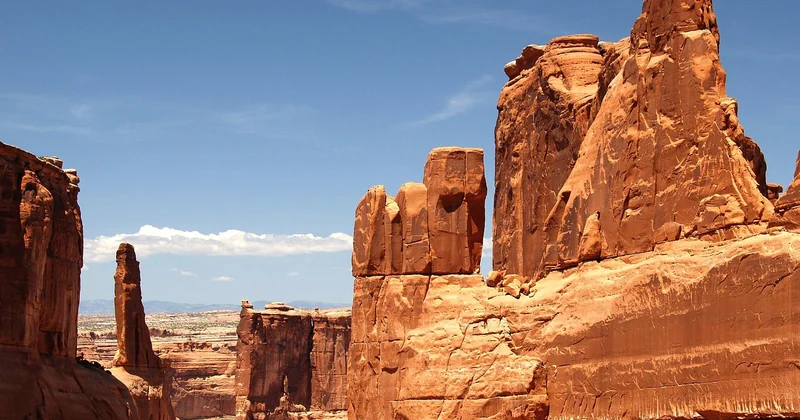
That ranking matters for planning, not for bragging. High visitation means shuttle systems, packed trailheads before 8 a.m., and timed-entry reservations during peak season at several of them. If you're building an itinerary around the famous names, you're building it around crowds. Plan accordingly.
| Park | Typical crowd pressure | Best timing strategy |
|---|---|---|
| Great Smoky Mountains | Heavy, year-round | Weekday mornings; avoid fall leaf season |
| Zion | Very heavy, spring–fall | First shuttle of the day, or go in winter |
| Grand Canyon (South Rim) | Heavy | Sunrise at Mather Point; North Rim for quiet |
| Yellowstone | Heavy in July–August | Late May or September |
| Rocky Mountain | Moderate to heavy | Timed entry, early slots |
Here's the honest trade-off: the less-visited parks are often the better road trip. I've had North Cascades trails almost to myself in August. Try that at Zion in June.
What are the top 10 prettiest national parks?
Prettiness is subjective, so treat any ranking as a starting point rather than a verdict. Still, a few parks come up again and again when people describe the most striking scenery they've seen: Glacier, Yosemite, Zion, Bryce Canyon, Grand Teton, North Cascades, Redwood, Canyonlands, Olympic, and Denali.
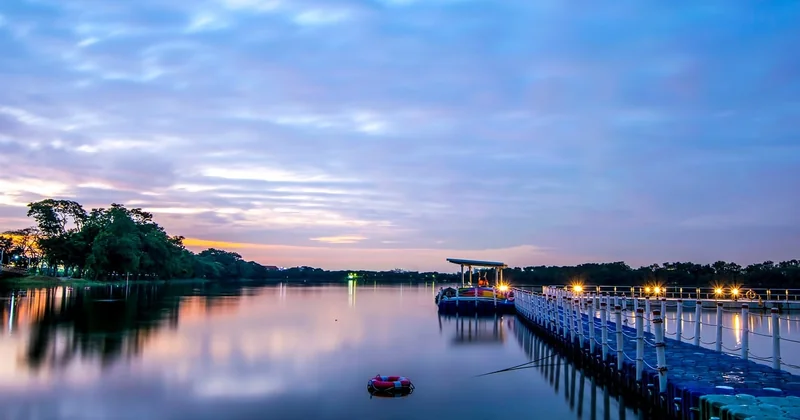
What separates them isn't just beauty — it's variety within a single visit. Glacier gives you glacial lakes, alpine passes, and Going-to-the-Sun Road, a drive that many people rank as the best in the entire park system. Yosemite packs granite walls, waterfalls, and sequoias into one valley.
Glacier and the short-season problem
Glacier National Park is spectacular and brutally seasonal. Going-to-the-Sun Road typically doesn't open fully until late June or early July, and it can close again with early snow. If your entire trip depends on driving that road, you need a backup plan. I met a couple in 2024 who'd driven from Ohio specifically for it, arrived in mid-June, and found the high pass still closed. They had no plan B. Don't be them.
Which is nicer, Zion or Bryce?
Neither is "nicer" — they're doing different things, and that's exactly why the comparison is worth understanding. Zion is about scale and drama: you're down in a canyon looking up at sandstone walls, and the shuttle system means you're rarely alone. Bryce is about erosion and strangeness: hoodoos, amphitheaters, and a rim you can walk along while barely seeing another person at dawn.
My take, after visiting both three times: Zion for the first impression, Bryce for the memory. Zion hits you immediately. Bryce grows on you over a day or two, once you stop expecting it to look like Zion.
How long do you need for each?
- Zion: two full days minimum. Angels Landing requires a permit, and the Narrows needs the right water conditions.
- Bryce: one long day is enough for the main amphitheater; two if you want to hike below the rim.
- Both: they're roughly 90 minutes apart, so there's no reason to choose.
- Crowds: Zion is significantly busier. Bryce at sunrise in September felt almost empty to me.
If you only have 48 hours in the region, do Zion. If you have four days, do both and give Bryce the sunrise.
How to build an itinerary that actually holds up
Distances in the American West lie to you on a map. The Utah park corridor — Zion, Bryce, Capitol Reef, Arches, Canyonlands — looks compact, and it is, relatively. But add Grand Teton or Glacier and you're suddenly looking at ten-hour drives between clusters.
A seven-day trip should realistically cover two or three parks. A ten-day trip can handle three or four. A two-week trip opens up a proper Western loop: fly into Las Vegas, drive Zion, Bryce, Capitol Reef, Moab, then loop back. That's roughly 1,200 miles of driving spread across fourteen days, which is comfortable.
The logistics nobody mentions upfront
Timed-entry reservations, backcountry permits, and seasonal road closures now shape itineraries more than personal preference does. Tioga Pass in Yosemite closes with snow and stays closed well into spring — often into June or later. Several popular parks require advance entry reservations during peak months. Check each park's official page before you book anything non-refundable.
I once built an entire trip around a road that had been closed for weeks. Nobody's fault but mine. Now I check status two weeks out and again the morning of.
The counterintuitive part: fewer parks, better trip
Every experienced park traveler I know eventually lands on the same conclusion: the trip you remember is the one where you sat still somewhere for a while. Two nights at one campground beats one night at four. A full day on a single trail beats four half-days in four parking lots.
So pick three parks instead of seven. Give each one enough time to surprise you — because the moments that stick aren't the ones you planned. They're the elk wandering through your campsite at dusk, or the trail you took on a whim because you had a spare afternoon.
You can't schedule those. You can only leave room for them.