Ask ten people for the best small towns to visit in Italy and you'll get ten versions of the same list: Orvieto, Lucca, Assisi, maybe Matera if they're feeling adventurous. All gorgeous. All crowded. And all, at this point, a little predictable.
So let me try something different. I've spent years routing trips around Italy the slow way — trains, buses, and a rental car I regretted on at least four occasions — and I've come to care less about which town is objectively prettiest and more about whether you can actually enjoy it on a Tuesday in October. That's the filter. Not Instagram. Not a ranking. Logistics, season, and whether the place still feels like it belongs to someone.
Key Takeaways
- Small-town Italy rewards specificity: under 20,000 residents, a working train station or a short bus hop, and a real off-season life.
- The most reliably underrated regions right now are inland Abruzzo, the Marche hills, and southern Basilicata.
- June through August breaks the experience in the famous names — go shoulder season or accept the queue.
- A car helps, but a car in a historic center (ZTL zone) means a fine you'll get in the mail six months later. Ask me how I know.
- The prettiest town and the best town to stay in are rarely the same place.
How I chose these towns (and why criteria matter)
Most lists never tell you the rule they used. That's the problem. "Beautiful" is a feeling, and feelings don't help you book a train.
My filter is blunt. Under roughly 20,000 residents. Reachable without a car, or with a car only for the last short leg. A functioning high season and people still living there in January. And — this one is personal — at least one place to eat that isn't aimed entirely at visitors.
That last criterion eliminates more towns than you'd think.
Why small population doesn't automatically mean authentic
Plenty of tiny towns are tiny because they're tourist machines with almost no year-round residents. Others are tiny and completely alive. The number doesn't tell you which. What tells you: are the schools open, is there a bakery that closes at 1pm for lunch regardless of who's walking past.
Franchement, I've stayed in towns of 3,000 that felt hollow and towns of 15,000 that felt like actual communities. Size is a starting point, not a verdict.
What is the most underrated place in Italy?
Santo Stefano di Sessanio, in Abruzzo. And I'll defend this one.
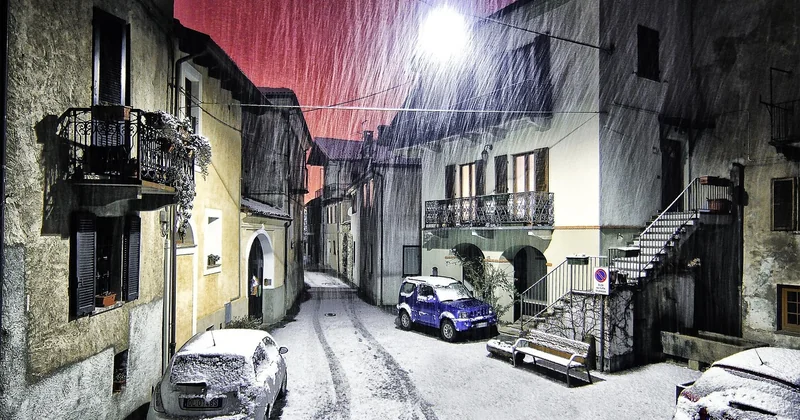
It sits inside the Gran Sasso national park, a stone village of maybe 100 permanent residents, largely rebuilt over the past two decades after decades of abandonment. There's a restored albergo diffuso — a hotel spread across the old houses — and little else. No souvenir stalls. No tour buses. On the evening I stayed, the only other people in the tiny square were an older couple playing cards and a cat that clearly owned the place.
The catch? You need a car, and the roads wind for what feels like forever. But the payoff is a town that hasn't been sanded down for your convenience.
Other towns that deserve more attention than they get
A few more that rarely crack the big lists but consistently deliver:
- Bomerano — technically a hamlet, base of the Path of the Gods on the Amalfi Coast, far cheaper than Positano below it
- Loreto Aprutino — olive-oil country in Abruzzo, almost no foreign visitors
- Gradara — a walled Marche town with a castle you can walk in under an hour, yet somehow overlooked
- Sarnano and the Sibillini foothills, where you'll hear mostly Italian
Notice the pattern: these are places you reach by accepting a bit of friction. That friction is the filter.
Which little town in Italy was named Italy's most beautiful village?
The official designation isn't a single national title — it's membership in I Borghi più Belli d'Italia, an association that certifies villages meeting strict criteria on heritage, upkeep, and population. Several hundred towns hold the badge, and new ones are admitted as they qualify.
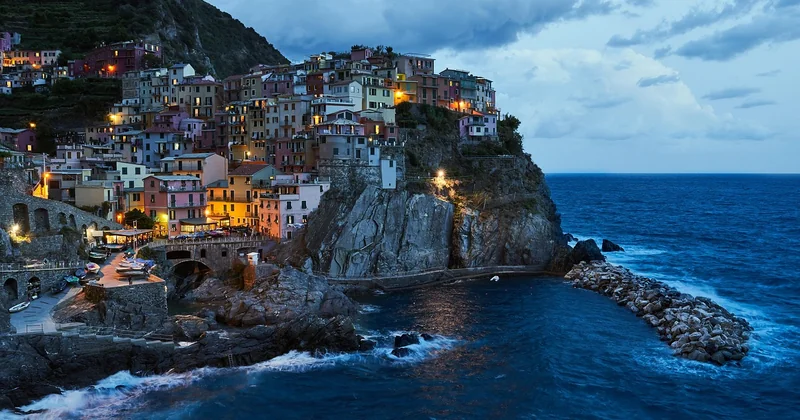
What people usually mean by this question: which town topped a recent poll or contest. Those results rotate year to year, and — honest warning — the winner immediately gets more visitors, which somewhat defeats the purpose of seeking out an undiscovered place.
Does the "most beautiful village" badge actually help you choose?
As a shortlist, yes. As a decision, no. Membership tells you the town is well preserved and cared for. It does not tell you whether it's quiet when you arrive, whether there's anywhere decent to sleep, or whether it's four hours from anywhere you actually wanted to be.
I treat the badge as a starting filter, then apply the logistics test on top. That combination has never let me down.
What is the prettiest city to visit in Italy?
Depends whether you mean "prettiest" or "best to actually visit right now."
For pure visual impact, it's hard to argue against Venice — but Venice in peak season is a city optimised for turnover, not for you. The honest answer most travellers arrive at eventually: the prettiest place is often a town you can still walk through without sidestepping a selfie stick every four steps.
| Town | Region | Best season | Car needed? | Feel |
|---|---|---|---|---|
| Matera | Basilicata | April–May, September | No (train + bus) | Dramatic, growing crowds |
| Santo Stefano di Sessanio | Abruzzo | Late spring, autumn | Yes | Remote, empty, raw |
| Urbino | Marche | May, October | No | Renaissance, calm |
| Bomerano | Campania | April, October | Partly | Hiking base, unpretentious |
| Tropea | Calabria | June, September | Yes | Cliffside, very local |
If I had to pick one for a first trip: Urbino. It's walkable, has real history, sits in the Marche hills, and it doesn't swallow you whole the way the famous names do.
Where to go in Italy that isn't touristy?
Two rules. First, go inland. Second, go where the train doesn't end at a beach.
The coast absorbs almost all the summer pressure. Move twenty kilometres inland and the crowd density drops off a cliff. Inland Abruzzo, the Marche hills behind Ancona, and the interior of Basilicata all prove this every single season.
The seasonality problem, plainly
Here's the thing nobody puts in a listicle. Mid-July to late August, many of the famous small towns see their visitor numbers roughly double or triple against shoulder months, while a chunk of their restaurants and small hotels shut for parts of winter. You get two narrow windows — roughly May–June and September–early October — where both the weather and the crowds cooperate.
I once booked a Marche hill town for early August, convinced I'd outsmarted everyone. The piazza was packed, the one good trattoria had a two-hour wait, and I ate a mediocre panino standing up. Lesson paid for.
Practical logistics most guides skip
- Late-evening trains between small towns are rare — check the last departure before you plan dinner
- Historic centres are almost always ZTL zones; a rental car entering one triggers a fine that arrives by post months later
- Park outside the walls and walk in — always
- Many family-run places close one weekday, often Monday or Tuesday, not Sunday
- Buses cover gaps trains don't, but schedules thin out drastically after 7pm
The town you'll actually remember
The best small towns to visit in Italy aren't the ones that top a poll. They're the ones where you can still hear the town going about its business around you — a door closing, someone calling across a courtyard, the smell of bread from a shop that doesn't have a website.
Chase that, not the ranking. And if you find yourself in a stone village in Abruzzo with nothing to do but watch an old couple play cards in the square, don't look for the exit. Stay for the next hand.