Somewhere in the world right now, someone is standing at the bottom of a mountain, looking up, and quietly deciding they don't belong there. Too much gear in the shop windows. Too many videos of people dangling off cliffs. That's the real barrier to hiking, and it has nothing to do with fitness. It's the feeling that the trail wasn't built for you.
I want to kill that feeling, because the best hiking trails for beginners around the world aren't the ones with the most dramatic photos. They're the ones where the path is wide enough to walk two abreast, where a wrong turn costs you twenty minutes instead of a night in the woods, and where there's a coffee or a bus at the end. That's a completely different list from the one most people share.
Key Takeaways
- A trail counts as beginner-friendly based on cumulative elevation gain, terrain surface, and bail-out options, not distance alone.
- Most "easy hike" lists are dominated by North America and Western Europe. The gentlest trails are often elsewhere.
- Hiking is unusually good for restless, easily-distracted brains, and there's a practical reason for that.
- You can absolutely walk 20 miles in a day. Whether you should on your first outing is another question.
- Online reviews are a terrible difficulty gauge. Read trail maintenance reports instead.
What actually makes a trail beginner-friendly
Distance is the number everyone quotes and the one that matters least. A flat 10-kilometre walk on a well-graded path is easier than a 4-kilometre climb that gains 500 vertical metres. Nobody tells beginners this, and it's why so many first hikes end in misery.
The four numbers to check before you commit
Ignore the star ratings. Look for these instead, on any trail page or topographic map:
- Cumulative elevation gain — under 300 metres is genuinely gentle; above 600 and you're climbing, regardless of what the description claims.
- Surface type — crushed gravel and packed dirt are forgiving; scree, wet roots, and loose rock demand ankle strength beginners rarely have yet.
- Bail-out points — a short loop, or a trail that crosses a road halfway, means you can quit without drama.
- Water and shelter — a village, a hut, a cafe. Not glamorous. Extremely relevant when the weather turns.
Here's the thing: most trail descriptions online were written by people for whom a 15-kilometre day is routine. Their "easy" is your "why are my legs shaking." I learned this the hard way on a supposedly simple coastal path in the Mediterranean that turned out to be a staircase bolted to a cliff. Elevation gain listed: not mentioned anywhere. Actual gain, by my watch: 780 metres. I finished it. I did not enjoy the last two hours.
Five beginner trails worth a flight
The geographic concentration problem in hiking content is real. Search for easy trails and you'll get the Dolomites, the Rockies, and the Cotswolds on repeat. The gentler, quieter options sit elsewhere, and they tend to be cheaper, less crowded, and warmer.
Jeju Olle Trail, South Korea
The Olle network on Jeju Island is split into short, signposted segments, most finishing near a bus stop or a village. Route 1-1 along the coast is under 15 kilometres with minimal climbing and constant sea views. Signage is colour-coded and generous, which matters enormously when you don't speak the language.
Kumano Kodo, Japan
The Nakahechi route can be walked in single-day sections between villages, with guesthouses at both ends and a bus that connects them. Stone-paved, well maintained, and shaded by cedar forest for long stretches. Day sections of 8 to 12 kilometres with moderate climbs are entirely manageable for a first-timer.
Seven Hanging Valleys, Tenerife
About 5 kilometres of coastal path in the Canary Islands, mostly level, with a couple of short stepped sections. Bus access at both ends. The catch is heat: start before 9am or you'll cook. This is the trail I'd hand to someone who has never hiked and wants to understand why people bother.
The Dove Lake Circuit, Tasmania
A 6-kilometre loop around a glacial lake beneath Cradle Mountain, on a boardwalk for much of the way. Elevation change is modest. Weather swings fast at that latitude, so pack a shell jacket even in summer. The boardwalk means you can look up instead of at your feet, which is the whole point.
The first section of the Laugavegur, Iceland
Purists will object, because the full Laugavegur is a serious multi-day trek. The opening stretch from Landmannalaugar is a different animal: geothermal steam, rhyolite hills in colours that look edited, and a gentle valley floor. Walk two hours in, turn around, take the bus back. No shame in it.
Why do ADHD people like hiking?
Because hiking supplies exactly the conditions an ADHD brain tends to work well under, and it supplies them continuously rather than in bursts. Movement, changing scenery, mild physical effort, and a clear immediate goal at the end. There is no inbox. There is no meeting at 3pm. The environment itself does the regulating.
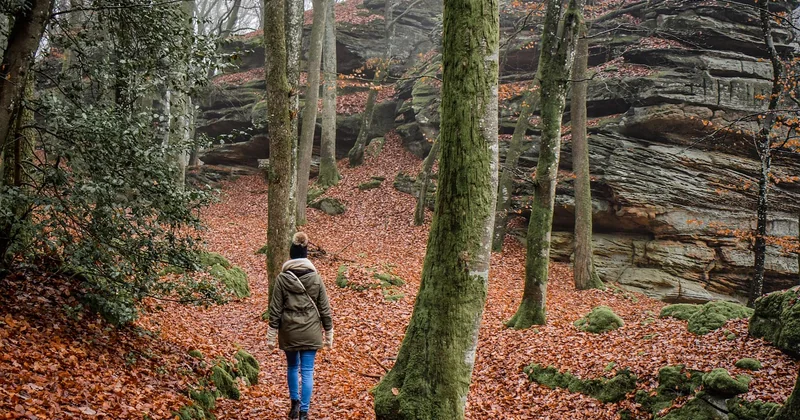
Physical activity reliably affects attention and mood — that part is well established, and you don't need a study citation to notice it in yourself. What's specific to hiking is the structure. The path tells you where to go. Effort has an obvious, visible payoff, whether that's a ridge, a lake, or a village. For someone whose brain struggles with open-ended tasks, that's a rare gift.
I've met a striking number of hikers who describe themselves as chronically distracted, and they all say roughly the same thing: it's the only activity where they stop feeling like they're failing at something. Worth trying if that resonates. Start with the flattest trail on this list.
Can a human walk 20 miles in a day?
Yes. A reasonably healthy adult can walk 20 miles (roughly 32 kilometres) in a day, and plenty of people do it regularly on long-distance routes. On flat ground at a steady pace, that's somewhere in the region of seven to nine hours of walking, plus breaks.
What that number hides is recovery. A 20-mile day on pavement will leave a beginner sore for two or three days. The same distance on soft forest trail with 800 metres of climbing is a different sport entirely. And the last five miles are never as fast as the first five, no matter how good you feel at lunch.
For a first season, keep days between 8 and 15 kilometres and increase by roughly 20 percent per week. That's the progression that kept me injury-free after I ignored it and spent a week limping.
Comparing beginner-friendly regions
Cost and logistics matter as much as terrain. Here's how the main options stack up for someone planning a first hiking trip.
| Region | Typical day distance | Public transport access | Best season | Relative cost |
|---|---|---|---|---|
| East Asia | 8-15 km | Excellent | Spring, autumn | Moderate |
| Canary Islands | 5-14 km | Good | Oct-April | Low to moderate |
| Oceania | 6-12 km | Variable | Nov-March | High |
| Western Europe | 10-20 km | Excellent | May-Sept | Moderate to high |
| North America | 5-20 km | Poor outside parks | June-Sept | Moderate |
Notice the transport column. It's the single most underrated factor for beginners, because it removes the need to rent a car, read local road rules, and navigate back to a trailhead at dusk when you're tired.
Which country has the best hiking trails?
Switzerland, on infrastructure alone. The signposting is standardised nationwide, with walking times printed at every junction, and almost every trail connects to a train, a cable car, or a bus. You can hike point-to-point across the country without ever opening a map on your phone. For a beginner, that safety net is worth more than any view.
If your priority is variety rather than hand-holding, Japan and New Zealand both beat it. Japan offers coastal paths, cedar forest, and volcanic terrain within a few hours of each other. New Zealand compresses alpine, coastal, and rainforest walking into a country you can drive end to end in a day. Neither is as forgiving as Switzerland, and neither pretends to be.
What are the 10 most beautiful hikes in the world?
There's no defensible ranking, and any list claiming otherwise is selling something. Beauty depends on weather, season, and what you personally find moving. That said, a handful of routes come up again and again, and they're worth knowing about even if you won't walk them this year: the Tour du Mont Blanc, the Milford Track, the Inca Trail, the Everest Base Camp route, the Kalalau Trail, the W Trek in Patagonia, the Haute Route, the Overland Track, the West Highland Way, and the Kumano Kodo.
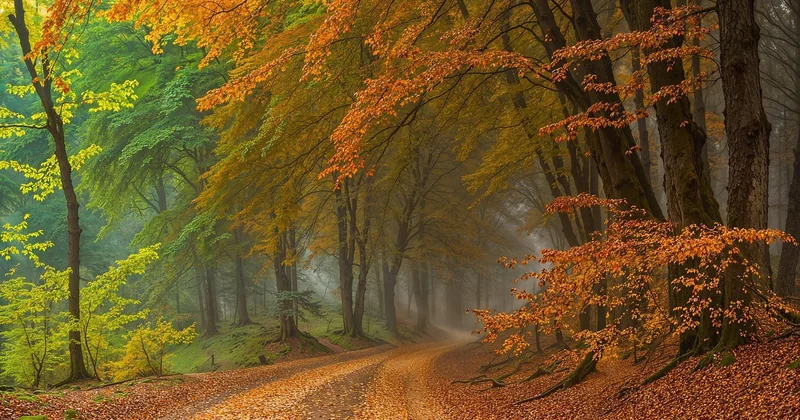
Look closely at that list and you'll see the trap. Most of them involve multi-day commitment, serious elevation, or permits booked months ahead. They are wonderful goals and terrible first hikes. Save them.
The part nobody writes about
Beginner hiking content obsesses over which trail to pick and almost never mentions what happens when it goes wrong. So here's the short version, from someone who has got it wrong more than once.
- Download an offline map of the area before you leave wifi. Phone signal disappears exactly where you need it.
- Tell someone your route and your expected return time. An hour late means a phone call; six hours late means a search.
- Carry more water than feels reasonable. Thirst arrives after dehydration does.
- Turn around if the weather closes in. The mountain will still be there next year. That's not a consolation prize, it's just true.
The trails on this list share one quality: they let you be a beginner without punishing you for it. That's the only criterion that ever really mattered. Pick the flattest one, walk it slowly, and notice that nobody on the path is watching your pace. They're all looking at the same thing you are.