Somebody asked me last month why I'd pay good money to sleep in a tent bolted to a cliff face in the Dolomites when a hotel bed was forty minutes away. Fair question. The honest answer is that a hotel bed doesn't make you feel anything. A portaledge at 2,000 metres, wind throwing the fabric around all night, does.
But here's what most adventure travel lists won't tell you: chasing thrills badly is how people get hurt, waste thousands, or end up on a trip that sounded wild in the caption and felt flat in real life. This guide is the version I wish someone had handed me when I started planning these trips myself. No filler. Just what actually works.
Key Takeaways
- Thrill is relative. A via ferrata that terrifies a beginner is a warm-up for someone who climbs weekly.
- Check whether your travel insurance actually covers the activity you're booking. Most standard policies exclude anything with a "dangerous sports" clause.
- Operator certification matters more than price. A cheap guide is expensive if something goes wrong.
- Book shoulder-season windows where you can. Crowds on a big-name route ruin the experience as much as bad weather.
- Some of the best adrenaline activities near you cost almost nothing — no flight required.
Why most adventure travel lists fail you
Scroll through the top results for "adrenaline activities" and you'll see the same eight items recycled: skydiving, bungee jumping, white-water rafting, zip-lining, shark diving, roller coasters, paragliding, and something involving a helicopter. Nothing wrong with any of them. The problem is that a list of activities isn't a plan. It doesn't tell you whether you're physically ready, what it costs, when to go, or what happens if it goes sideways.
I learned this the hard way on a canyoning trip in Slovenia. I'd booked based on a photo, not on the grade. Turned out the route involved a 20-metre rappel into a slot canyon with a strong flow. I'd never rappelled before. Nothing bad happened, because the guide was excellent and talked me through it, but I spent the first hour genuinely scared rather than thrilled. There's a difference, and it matters.
The gap between inspiration and planning
Inspiration content sells the feeling. Planning content sells the trip. If you only consume the first kind, you end up with a booking that looks great on paper and overwhelms you on the day. So let's close that gap.
Thrill is not a universal unit
Two people can do the same activity and have opposite experiences. A 40-metre bungee is a life highlight for one person and a panic attack for another. Before you book anything, be honest with yourself about which of these you actually are:
- The person who wants controlled fear with a safety net
- The person who wants genuine exposure and consequence
- The person who wants speed without much risk at all
- Or honestly, the person who wants a great story to tell and isn't sure about the middle part
None of those are wrong answers. Matching the activity to the answer is what makes the trip work.
High-adrenaline adventures worth the flight
If you're travelling specifically for the rush, these are the categories that consistently deliver, plus the practical detail that most lists skip.
| Activity | Typical duration | Physical prerequisite | Best season |
|---|---|---|---|
| Skydiving (tandem) | Half a day | None beyond basic mobility | Spring to early autumn |
| Via ferrata | 3–6 hours | Some fitness, no technical skill | Late spring to early autumn |
| Advanced canyoning | Full day | Swimming, rappelling experience | Summer |
| Volcano trekking | 1–2 days | Good cardio, altitude tolerance | Dry season only |
| Cave diving | Varies | Full cave certification required | Year-round in some regions |
Skydiving and the honest truth about it
People oversell the fear and undersell the logistics. A tandem jump is roughly 20 minutes of preparation, a short flight, and about 50 seconds of freefall. The sensation isn't falling. It's a wall of air holding you up. If you want something more demanding, accelerated freefall certification takes about a week and a real financial commitment — the kind of thing you plan a whole trip around rather than slot into a weekend.
Via ferrata: the underrated middle ground
This is the one I recommend most often, and I'll defend that position firmly. You clip into a steel cable running along a mountain route, so the exposure is real but the consequence of a slip is low if you're clipped in properly. A guided introductory route takes a few hours. You get height, air, and genuine nervous energy without needing years of climbing experience. Northern Italy, Austria, and Switzerland have the densest networks.
Adrenaline activities for adults who want something real
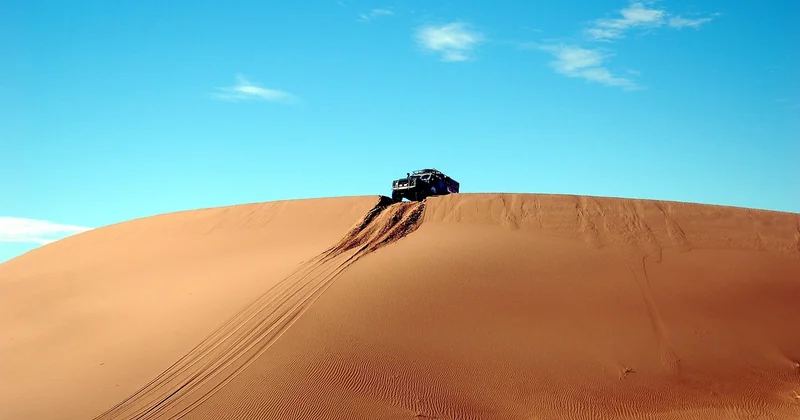
There's a particular problem once you're past your twenties. Group trips get harder to organise, recovery takes longer, and the "just show up and figure it out" approach stops working. That doesn't mean the options shrink. It means you plan differently.
Build in a progression
The most rewarding trips I've taken stacked skills across several days instead of trying to hit one big peak. A long weekend of guided scrambling followed by a multi-pitch climb the next season beats one isolated spectacle, because your confidence compounds. You also notice the second trip feels completely different — calmer, sharper, more enjoyable.
Recovery and training matter more than you think
Altitude, cold water, and long days on your feet hit differently at 40 than at 22. Two or three months of focused cardio and leg strength before a big trip changed my experience entirely — I stopped fighting my own body and started actually looking around. Book the trip first, then train for it. Having a fixed date makes the training stick.
- Eight weeks of running or cycling, three sessions a week
- Add stair or hill work once a week
- Practise the specific skill if there is one — rappelling, swimming in cold water, carrying a loaded pack
- Test your kit before you rely on it
Adrenaline rush activities for couples
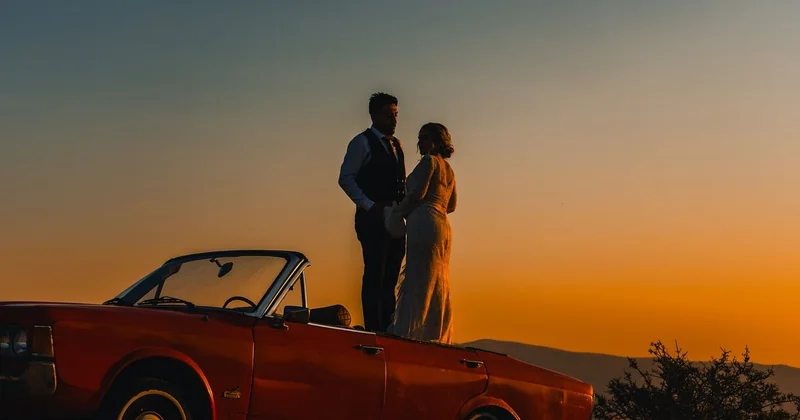
Shared fear bonds people faster than shared dinner. The catch is that a couple usually has two different fear thresholds, and pretending otherwise is how a nice trip turns into an argument halfway up a mountain.
Pick activities with an exit
Anything where one person can stop without ruining it for the other is a safe bet. Tandem paragliding, zip-lining, guided canyoning at an easy grade, or a via ferrata with an escape route. You each get the rush, and neither of you becomes the reason the other one bails.
The conversation before you book
Ask directly: what's the line you don't want crossed? My partner's line is freefall. Mine is dark, tight water. Knowing that saved us from a booking that would have gone badly for one of us. It's not a romantic conversation, but it's a useful one.
Thrill-seeking activities near you and at home
Not every rush needs a passport. Some of the closest options are also the cheapest, and they're a good way to test whether you actually enjoy this before spending four figures on a flight.
What to look for locally
Climbing gyms with lead walls, indoor skydiving tunnels, bouldering, open-water swimming groups, mountain biking trails, caving clubs, and scrambling routes on local hills all deliver more than people expect. A lead climbing wall gave me the same sweaty-palm moment as an outdoor route, for the price of a day pass.
At-home options that actually work
Cold showers and ice baths are the obvious one and genuinely do produce a physiological jolt. Beyond that: breath-hold training, fast-paced interval work, and bouldering on a home wall if you have the space. None of it replaces a big trip, but it keeps the edge sharp between them.
The part nobody writes about: safety and insurance
Here's the detail that ruins more trips than bad weather. Standard travel insurance almost never covers what thrill seekers actually do. Read the exclusions list before you pay for anything, and look specifically for the dangerous activities clause.
What to check before you book
- Is your specific activity named as covered, or excluded?
- What's the maximum altitude covered if you're trekking?
- Does it cover guided activity only, or unguided too?
- Is helicopter evacuation included, and up to what amount?
- What's the excess on a claim?
Operator credentials
Ask for the guide's certification body. In Europe, look for national mountaineering or canyoning qualifications. In diving, ask for the instructor's agency and certification level. A good operator will answer immediately and without irritation. That reaction alone tells you a lot.
I once walked away from a canyoning booking because the operator couldn't tell me the guide's qualification. It cost me a day of the trip. It was still the right call.
The question that actually matters
Before you book anything, ask yourself what you want the memory to be. If it's the photo, book the spectacle. If it's the feeling of doing something that genuinely stretched you, book the one that scares you a little and prepare for it properly.
The trips I regret aren't the ones where I was frightened. They're the ones where I played it safe and felt nothing at all. Choose the version that leaves a mark, and do the boring prep work so the only thing you're managing on the day is the experience itself.