Munich on a Tuesday, Vienna by Thursday, Budapest for the weekend. I've watched a lot of people draw that line on a map and book it in one sitting — and I've watched almost all of them regret it by day six. Not because the cities were wrong. Because the plan was built like a shopping list instead of a route.
Planning a multi country trip in Europe is a logistics problem disguised as a travel dream. The dream part is easy. The logistics part is where trips collapse: a train you didn't know required a seat reservation, a border crossing that eats half a day, a "quick hop" between two capitals that turns out to be nine hours door to door. Get the logistics right and the dream survives. Get them wrong and you spend your vacation staring at departure boards.
What follows is the method I actually use now, built from the mistakes I made learning it. Nothing here requires a travel agent, and nothing here assumes you have unlimited time or money.
Key Takeaways
- Cap yourself at one new base every three nights minimum. Two-night stops are tolerable once per trip, not five times.
- Count door-to-door travel time, not flight or train time. A 90-minute flight is routinely a five-hour day.
- Book the long-haul legs early, keep the short ones flexible. The opposite approach costs you money and freedom at the same time.
- Rail passes only pay off for spontaneous, frequent travel. If you already know your dates, point-to-point tickets usually win.
- Schengen rules apply to your whole trip, not to individual countries — the 90/180 limit is calculated across the entire area.
- Pack for one climate band and one laundry cycle. Multi-country packing fails when you pack for the itinerary instead of the weather.
How to plan a multi country trip in Europe without burning out by day four
The failure mode is almost always the same: too many stops, too few nights in each. I did a five-country run through Central Europe in twelve days back in 2022. By Prague, which was stop number four, I couldn't remember what I'd seen in Kraków. The photos were fine. The memories were mush. That trip taught me the only rule I now treat as non-negotiable.
The three-night rule
Give every base at least three nights, unless it's a deliberate one-night transit stop. Three nights means two full days on the ground, which is the minimum for a city to stop feeling like an airport terminal. A two-night stop gives you one usable day after you subtract arrival, check-in, and the fog of travel fatigue. Do that three times in a row and you've built a trip that's technically in Europe but functionally on trains.
A realistic twelve-day trip has three bases, maybe four if one of them is a small town you can walk end to end in an afternoon. Not seven. Please, not seven.
Count door-to-door hours, not transport hours
This is the single most useful habit I picked up. A flight from Berlin to Rome looks like two hours in the search results. Add getting to the airport, security, the buffer you need because you're not insane, baggage claim, and the transfer into the city — you're looking at six hours minimum. A train from Berlin to Prague, by contrast, is around four hours city center to city center, and you can walk onto it fifteen minutes before departure.
Which brings up an obvious problem: the "cheap" short flight is often the most expensive leg of your trip once you price in the airport transfers at both ends.
How many countries should you actually visit?
Fewer than you think. The number people quote when they're excited is usually double what they can actually enjoy.
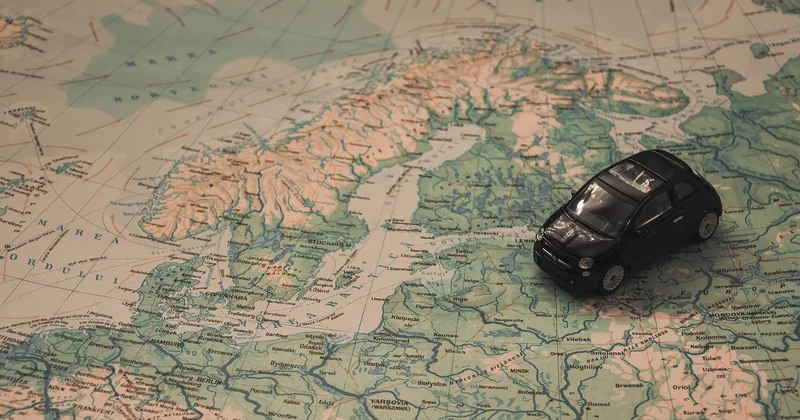
Here's the rough arithmetic I use. Take your total days in Europe. Subtract two for arrival and departure days, which are always half-wrecked. Subtract one day per long-distance move between bases. What's left is your sightseeing time. If a fifteen-day trip includes five moves, you've just spent a third of your vacation in transit.
Two to three countries is the sweet spot for a two-week trip. Four works if the countries are small and adjacent — think Belgium, the Netherlands, and a slice of Germany. Four countries spread across the continent in the same two weeks is an itinerary designed by someone who has never queued for a train ticket.
Pair countries that make geographic sense
Coherent pairings share a border or a short rail link. Incoherent ones require flying. Some combinations that work well:
- Portugal and Spain — one land border, excellent rail and bus links, and you can do Lisbon to Seville in a single morning.
- Austria, Czechia, and Hungary — Vienna, Prague, and Budapest form a rough triangle with direct trains between each pair.
- The Netherlands, Belgium, and northern France — dense rail, short distances, minimal planning needed.
- Italy alone, honestly, if you have less than two weeks. It's bigger than it looks on the map.
And pairings that look clever on paper but aren't: Greece plus Scandinavia (no direct connection worth taking), Ireland plus anywhere in Eastern Europe, and anything that involves a ferry you haven't checked the schedule for.
Choosing how to move between countries
Transport is where most of your budget and most of your frustration live. There is no single best option — only the right option for a specific leg.

| Mode | Best for | Watch out for |
|---|---|---|
| High-speed rail | City-center to city-center pairs under 6 hours | Seat reservations are often mandatory and sell out on peak dates |
| Budget airlines | Long hops across the continent, when booked well ahead | Airport transfers can add hours and real money at both ends |
| Long-distance buses | Short international legs and last-minute bookings | Slow, and overnight comfort is genuinely poor |
| Night trains | Saving a hotel night on a long leg | Limited routes; book early or you're in a seat, not a bed |
| Ferries | Islands and a few specific crossings | Schedules are seasonal and sparse outside summer |
Rail pass or point-to-point tickets?
I've done both, and my honest answer is that the pass wins in exactly one scenario: you genuinely don't know your route and want to decide as you go. The flexibility is real and it's worth something.
If you already know your dates and cities, point-to-point tickets bought in advance are usually cheaper and always simpler. Many high-speed services in Western Europe get expensive close to departure, so booking a few weeks out makes a visible difference. The pass doesn't protect you from seat reservation fees on those same trains, which is the part most people miss.
My rule of thumb: fixed itinerary, buy tickets. Open itinerary, buy the pass. Don't buy a pass and then also pre-book everything — you've paid for flexibility you're not using.
The admin nobody mentions until it's a problem
Borders, insurance, and phone plans don't make for exciting planning. They also don't care about your excitement when they go wrong at six in the morning.
Schengen rules apply to the region, not the country
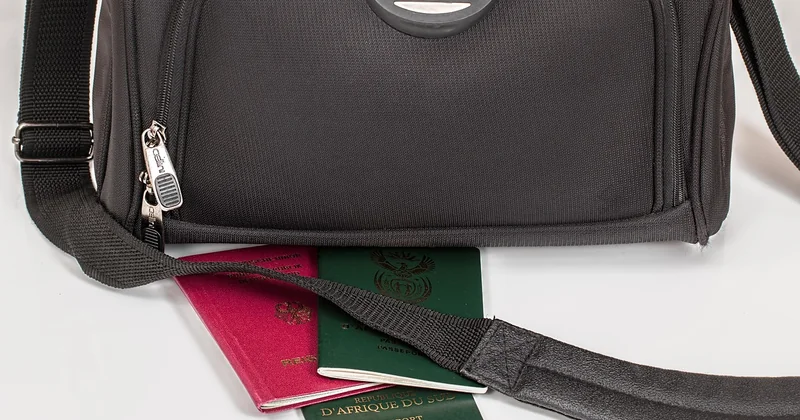
Most Western and Central European countries are in the Schengen area, which functions as a single space for short stays. For many nationalities, that means a limit of 90 days within any 180-day period across the whole area — not per country. If you're planning a long trip that loops through several Schengen states, the clock runs across all of them together. Check the rules for your specific passport before you build anything, because they vary by nationality and they do change.
Two practical points that catch people out. First, some countries in Europe are not in Schengen, so crossing into them works differently. Second, many countries require your passport to be valid for several months beyond your planned departure — a passport expiring three weeks after you fly home can be refused at the gate.
Insurance and phones
Get travel insurance that explicitly covers every country on your route. A policy bought for a single-country trip doesn't automatically stretch when you add a stop, and medical costs abroad are not a rounding error.
On connectivity: roaming within the EU works under the "roam like at home" principle for SIMs from EU providers, which covers most of what a typical multi-country trip needs. Step outside the EU and you're back to per-megabyte pricing or a local SIM. I keep an offline map downloaded for every city regardless — it has saved me more than once when a phone decided not to cooperate.
Money and tipping
Not every country on your route uses the euro, and exchange rates at airport kiosks are consistently poor. Use a card with no foreign transaction fees where you can, and withdraw local cash from bank ATMs rather than currency desks.
Tipping expectations shift noticeably as you move across the continent. In much of Central and Northern Europe, rounding up or leaving a small percentage is normal. In parts of Southern Europe it's more casual still. In the US-style sense of a mandatory 20%, nowhere in Europe works that way — so don't import the habit and don't stress about it.
How to plan a multi country trip in Europe with family
Everything above still applies, with three adjustments.
Cut your number of bases by one. Children absorb transit worse than adults do, and a travel day that's mildly tedious for you is a full-scale meltdown for a seven-year-old. Fewer moves, longer stays.
Book accommodation with a kitchen and a washing machine whenever you can. Eating every meal out with a family is the fastest way to blow a budget, and laundry access means you can pack for five days instead of fifteen. I'd trade a hotel's location for an apartment's washing machine on any trip longer than a week.
And build in one slow day per base with nothing scheduled. Not a museum day — a genuinely empty day. It's the thing that keeps a two-week family trip from turning into a forced march.
Are multi-country vacation packages worth it?
Sometimes, yes, and I'll defend that position against the DIY orthodoxy. A packaged multi-country tour handles transport, hotels, and the connective tissue between cities, which is exactly the part that eats your planning hours. If your time is worth more than your money, or if you're traveling with a group where consensus is hard, that's a real trade.
The catch is flexibility. Packaged itineraries move at their own pace, and you're committing to their idea of how long each place deserves. If your whole reason for going is to spend four unhurried days in one city, a package will fight you on it.
A planning sequence that actually works
Order matters more than people expect. Doing these steps out of sequence means redoing work.
- Fix your dates and your total budget first. Everything else is downstream of these two numbers.
- Pick two or three countries that share borders or short rail links.
- Choose your bases — one city or town per country, no more than one per three nights.
- Price the long-haul legs before you book anything else. If the transatlantic flight is brutal, the whole trip shape changes.
- Book accommodation with free cancellation where possible, so a change of plan isn't a financial event.
- Fill in day trips and activities last. They're the easiest thing to move and the least damaging to get wrong.
The step people skip is number four, and it's the one that determines whether the rest of the plan is even viable.
What I'd do differently if I started over
I'd stop treating the map as the plan. A route drawn across Europe looks efficient because distances are small. What the map doesn't show is the four hours of your life each arrow costs — the packing, the checkout, the station, the unfamiliar metro, the check-in, the unpacking. Those hours are real, they're finite, and they're the difference between a trip you remember and a trip you survived.
The best multi-country trip I've taken was three countries in sixteen days, with a full week in one city in the middle. Nothing about it was ambitious on paper. Everything about it worked.
So before you book anything, count your nights and count your moves. If the second number is closing in on the first, you're not planning a trip. You're planning a commute.