Must-try local dishes in Thailand: what to eat beyond the obvious
Order pad thai in Bangkok and half the table nods. Order som tam with fermented fish and watch who flinches. That gap tells you everything about how Thai food actually works: the famous dishes are real, but they are only the doorway. The kitchen behind it is regional, seasonal, and far stranger than the menu at your local Thai restaurant suggests.
This matters because Thai food is not one cuisine. It is a set of regional cuisines held together by rice, chili, and fish sauce, and they disagree with each other constantly. A northern curry and a southern curry can share a name and taste nothing alike. Eat only the tourist canon and you miss most of what makes the food worth traveling for.
Key Takeaways
- Thai food divides into distinct regional kitchens: north, northeast (Isan), central, and south.
- Sticky rice, fermented fish, and coconut milk are regional markers, not universal ingredients.
- Most dishes cost very little at street stalls, so the barrier to trying something new is low.
- Spice levels are adjustable if you ask early — but "not spicy" means something different in Isan.
- Seasonal and festival dishes rarely appear on restaurant menus abroad.
- You can eat vegetarian in Thailand, but you have to be specific about fish sauce and shrimp paste.
The must-try local dishes, region by region
Start with the dishes you already know, then move outward. The ones below are the ones I keep coming back to, sorted by where they come from rather than by fame.
Central Thailand and Bangkok
The central plain is where the dishes most foreigners recognize were refined. Pad thai, tom yum, green curry — all central, all built on a balance of sweet, sour, salty, and spicy that the region treats almost as a rule of law.
- Pad thai — rice noodles, tamarind, egg, peanuts. Simple, and genuinely hard to do well.
- Tom yum goong — hot and sour shrimp soup. The sourness comes from lime and tamarind, not vinegar.
- Pad krapao — stir-fried meat with holy basil and chili. The default quick meal for a huge number of Thais.
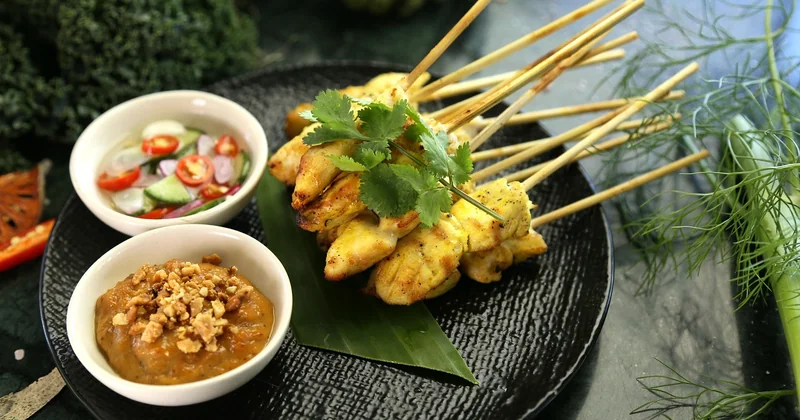
- Moo ping — grilled pork skewers, usually eaten with sticky rice on the side.
- Kai jeow — a Thai omelet, fluffy and deep-fried, often served over rice.
Isan and the northeast
If you eat one region properly, make it Isan. The food here leans sour, salty, and fiery, and it relies on fermented fish (pla ra) and sticky rice rather than jasmine rice and coconut milk. Som tam, larb, and grilled chicken with sticky rice are Isan staples, though they have spread nationwide.
Here's the thing about Isan food: it does not soften itself for outsiders. Ask for it mild and you still get heat. I once ordered larb "not spicy" at a stall in Khon Kaen and got a dish that made my eyes water — the cook had reduced the chili, but the fermented fish brought an intensity I had not expected. It was excellent. It was also not what I had asked for.
Northern Thailand (Lanna)
The north has its own grammar of flavor. Curries here are often thinner and less coconut-heavy, and the region leans on herbs, dried spices, and grilled meats.
- Khao soi — a coconut curry noodle soup with crispy egg noodles on top, one of the genuinely great noodle dishes anywhere.
- Sai ua — grilled pork sausage with lemongrass and herbs.
Southern Thailand
The south sits closest to Malaysia and it shows. Curries get coconut milk, turmeric, and sometimes a sweetness you won't find further north. Dishes tend to be sharper and more intensely spiced, partly because the region has historically used heat and acid to preserve food in a hot, humid climate.
How spicy is it really, and how do you order?
Thai chili heat is not a single dial. It is a spectrum, and it shifts by region, by cook, and by how that cook reads your face when you sit down.
The practical move is to ask before the food arrives, not after. Street vendors in tourist areas are used to the request and will adjust. In Isan and the deep south, they may adjust less, or not at all — not out of rudeness, but because the dish is supposed to taste that way. If you truly cannot handle heat, order something that isn't built on it: grilled meats, mild soups, or rice-based dishes.
A word on allergies: fish sauce and shrimp paste are in an enormous number of dishes, sometimes invisibly. If you have a shellfish allergy, this is not a "mention it once" situation. Say it clearly, at every meal, and carry written Thai to show. Peanut oil and peanuts are also everywhere, though less universally than people assume.
Can you eat vegetarian in Thailand?
Yes, but "vegetarian" as a concept travels imperfectly. Many Thai dishes that look vegetable-based are seasoned with fish sauce, shrimp paste, or both. So the honest answer is: vegetarian food exists, but you have to ask for it specifically, every time, and be prepared for a stall to tell you it isn't possible.
Your best tools are the phrase for "no fish sauce, no shrimp paste," and an awareness of the annual vegetarian festival, when a large number of vendors switch to fully plant-based cooking and mark their stalls accordingly. Outside that window, you are asking a cook to change a recipe on the fly, and some will refuse. Accept that gracefully.
| Region | Signature style | Where to start |
|---|---|---|
| Central / Bangkok | Balanced sweet-sour-salty-spicy | Pad thai, tom yum |
| Isan (northeast) | Sour, salty, very hot | Som tam, larb, moo ping |
| North (Lanna) | Herbal, less coconut | Khao soi, sai ua |
| South | Coconut, turmeric, sharp | Coconut curries, seafood |
Where to actually eat: markets, stalls, and timing
Restaurants get the attention. Night markets get the food. In almost every Thai city, the evening market is where the widest range of dishes is available at the lowest prices, cooked to order, in front of you.
Prices vary by city and by how far you are from a tourist center, but the general picture is this: street food is cheap enough that you can try four or five dishes in one evening for the cost of a single restaurant entree in Europe or North America. That low cost is exactly why you should be adventurous. If a dish isn't for you, you've lost almost nothing.
A few practical notes that took me longer to learn than I'd care to admit:
- Eat where the queue is local, not where the sign is in English.
- Go early for the freshest food — the best stalls sell out before late evening.
- Carry small cash. Many stalls don't take cards.
- Look for high turnover. A busy stall is a fresh stall.
Seasonal and festival dishes you might miss
Some of the most interesting food in Thailand is tied to a specific time of year and simply isn't available otherwise. Songkran and Loi Krathong bring out dishes and sweets that don't appear on regular menus, and certain fruits — mangoes, durian, rambutan — have narrow seasons where they taste dramatically better than the imported versions you find year-round.
If your trip lines up with a festival, treat it as a food opportunity, not just a spectacle.
The desserts worth saving room for
Thai desserts are less famous than the savory dishes, and that's a shame. They lean on coconut, palm sugar, rice, and tropical fruit, and they range from icy to chewy to almost savory.
- Mango sticky rice — coconut-soaked sticky rice with ripe mango. Best in mango season.
- Khao lam — sticky rice cooked inside bamboo, sometimes with coconut or beans.
- Lod chong — green rice-flour tubes in sweet coconut milk, served over ice. A hot-weather staple.
- Thong yip and other egg-yolk sweets — dense, old-fashioned, and often overlooked by visitors.
And then there's durian, which you either love or file under "never again." I'll admit I was firmly in the second camp the first three times I tried it. I'm not entirely sure I've switched sides.
One dish is never the point
The mistake I see most often is treating Thai food as a checklist — eat the seven famous dishes, take the photos, move on. That flattens a cuisine that is genuinely regional, seasonal, and specific. The famous dishes are worth eating. They are also the beginning, not the summary.
So here is the thing I'd leave you with. Order one dish you can't pronounce, at a stall with no English, at a time of day you wouldn't normally eat. That's where the food actually lives — and it's the only part of the menu that changes once you're home and the photos stop mattering.