Two years ago, a project manager I know—let's call her Nadia—collapsed in a hotel corridor in Lisbon, three days into a wellness retreat that cost her €3,800. She'd booked it after her doctor told her that her blood pressure and her sleep were "heading somewhere bad." She arrived exhausted, spent the first forty-eight hours crying in a sound bath she found ridiculous, and left feeling worse than when she'd arrived. Six weeks later, she was back at her desk, back at 60-hour weeks, and back where she started.
I've been writing about burnout recovery long enough to have made my own expensive mistakes here. The first retreat I ever attended—a five-day silent meditation thing in the Austrian Alps—was, frankly, a disaster for me. I hated every hour of it. I couldn't stop checking my phone, I found the group sharing sessions excruciating, and I came home with a knot in my stomach that took another month to untangle. What I learned from that failure is the thing nobody selling you a wellness retreats for stress relief and burnout package will tell you: the retreat is almost never the problem, and it's almost never the solution either. What happens in the six weeks after is what decides whether you actually recover.
So this isn't going to be another listicle of the ten most beautiful spas in Tuscany. There are hundreds of those. This is what I wish someone had told Nadia: what these retreats actually do, what they cost, when they help, when they're a waste of money, and—the question I get asked most often—what you do if you genuinely cannot take a single day off work.
Key takeaways
- A wellness retreat works because of interruption and removal, not because of the massages. The value is in the distance from your normal triggers, not the treatments.
- Most burnout retreats cost between roughly €900 and €6,000 for a week, with therapeutic programs costing more than spa-style ones. What you're paying for is structure and supervision, not luxury.
- If you can't take time off, a structured evening-and-weekend protocol can move the needle meaningfully. I'll outline the exact one below.
- The single biggest predictor of whether you relapse is what you change after you come back. No retreat fixes a job you return to unchanged.
What a wellness retreat for burnout actually does (and what it doesn't)
Strip away the marketing language and a good burnout retreat does three concrete things.
It removes you from the environment that's grinding you down. Every cue that tells your nervous system "be alert, respond, perform" disappears. Your inbox, your commute, your Slack notifications, the colleague who sighs loudly—gone. That removal alone does more than most people expect, because your body stops bracing. The problem is that this effect is almost entirely dependent on staying removed, which is why the rebound after a retreat can be brutal.
Second, it imposes a rhythm your body has forgotten how to generate on its own. Sleep at the same time. Eat at the same time. Move every day. Sit still, badly, for twenty minutes. I used to think the meditation was the active ingredient. It isn't. The rhythm is.
Third, and this is the part people undervalue, a therapeutic retreat gives you a trained human to talk to—a therapist, a coach, sometimes a doctor—who is obligated to spend hours with you. For a lot of burnt-out professionals, that's the first time anyone has asked how they actually are in years.
What it does not do
It does not fix a toxic manager. It does not make a 70-hour workload sustainable. It does not replace actual medical treatment if you're dealing with clinical depression, an anxiety disorder, or a physical condition that's been going undiagnosed. I've watched people spend five figures on retreats while ignoring the fact that they needed a doctor or a new job, and the retreat only bought them a temporary calm before everything crashed again.
There's also a subtler trap: the burnout-retreat industry has, in my view, absorbed some of the same logic that produced the burnout in the first place. Optimization, self-improvement, measurable outcomes. You can absolutely arrive at a retreat and turn recovery into another performance. I've done it.
What are the best retreats for burnout recovery?
The honest answer: the "best" retreat is the one whose structure matches what's actually wrong with you—and that depends far less on the location than most people assume. A beach in Bali means nothing if the program is a beauty spa with a yoga class bolted on. What matters is the ratio of supervised therapeutic time to free spa time.

Match the retreat to what is wrong
Based on the hundreds of accounts I've collected from readers and my own trips, here's the pattern that holds up:
- You're exhausted but basically functional. A structured, quiet retreat with some therapy and lots of sleep. Even a well-designed weekend works.
- You're cynical, detached, and can't care about anything. This is the classic depersonalization stage. You need a program with real one-to-one therapy, not group journaling. Retreats that only offer "relaxation" will bounce off you.
- You're physically breaking down—sleep gone, chest tight, gut in knots. Look for something with a clinical or medical component: a supervised program, a doctor on staff, a proper assessment. This is where cheap spa retreats become a false economy.
- You've already had one burnout. Prioritize programs that include a return-to-work plan. Without it, relapse is close to guaranteed.
Which brings us to the question everyone asks and almost nobody answers straight.
What is the average cost of a wellness retreat?
Here's the number that surprises people: the range is genuinely huge, and the price tells you almost nothing about the quality of the therapeutic work. A €700 weekend and a €5,000 week can both be excellent, or both useless, depending on the program.

Roughly, what you'll find in Europe and the US breaks down like this:
| Type of retreat | Typical length | Price range (per person) | What you're really paying for |
|---|---|---|---|
| Spa / wellness hotel | 2–3 nights | €250–€900 | Facilities and comfort. Minimal therapeutic content. |
| Yoga or mindfulness retreat | 4–7 days | €700–€2,200 | Structure, rhythm, group practice. Little one-to-one support. |
| Therapeutic / burnout-specific | 5 days–3 weeks | €1,800–€6,000 | Qualified therapists, individual sessions, clinical oversight. |
| Luxury / destination retreat | 7–14 days | €4,000–€15,000+ | Location, cuisine, exclusivity. The therapy is often an add-on. |
Notice what the table quietly tells you: the price jump from "spa" to "therapeutic" is the one that matters. The jump from "therapeutic" to "luxury" mostly buys you a nicer view. If your budget is tight, spend it on supervision, not on scenery. A €1,800 program with two individual therapy sessions a week will help you more than a €6,000 beach resort where the "wellness" is a hot tub and a massage menu.
And factor in the hidden costs nobody mentions. Flights. The days off—which, for freelancers, are unpaid. The follow-up therapy you'll likely want afterward. My rough rule: budget 20–30% above the headline price for the true cost.
How to recover from burnout when you can't take time off
This is the question the retreat industry tends to dodge, because the answer doesn't sell €4,000 packages. But it's the most important part of this article.
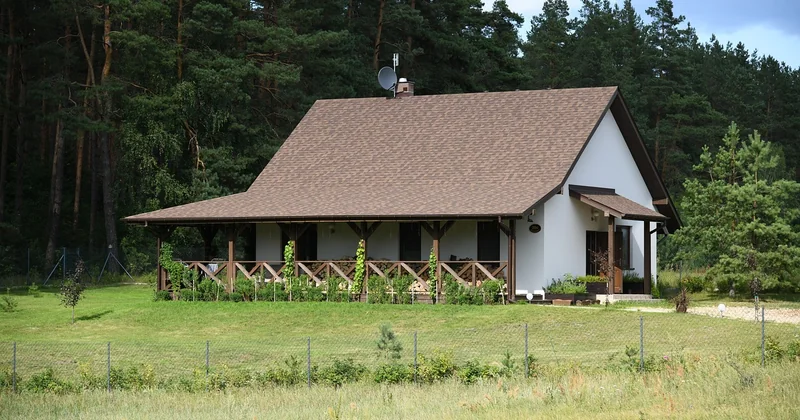
If you cannot take a week—or even a day—you can still do real recovery work. I've watched readers claw their way back using nothing but scraps of time and a bit of discipline. It's slower. It's less dramatic. It works.
The protocol I'd give a friend who can't take leave
- Protect one hour, every day, at the same time. Not "when things calm down." A fixed slot. Mine used to be 6:30am, before anyone could reach me. Guard it like a meeting with your boss.
- Build a weekend mini-retreat, once a month. Two consecutive days, phone off, no errands, one gentle physical activity, one long sleep. This is not the same as a lazy Sunday in front of your laptop.
- Do a real digital boundary. No work notifications between, say, 9pm and 7am. This single change moved my own sleep more than any supplement ever did.
- Get one hour of professional support a week. A therapist, a coach, whatever you can access. For many people this is the highest-return hour of the entire month.
- Say no to one thing a week. Just one. Pick the meeting, the favor, the project that drains you, and decline it. I cannot overstate how much this compounds.
- Move your body daily, gently. A walk counts. This isn't about fitness; it's about giving your nervous system a way to discharge.
- Fix one small thing at the source. The recovery protocol buys you room. It does not remove the cause. Use that room to change something concrete at work.
Will this replace a proper retreat? No. A week away, with supervision, in a different environment, will do more in seven days than a month of hour-long slots. But if your situation is "I literally cannot leave," this is the honest alternative—and it's far better than waiting for the collapse you're already heading toward.
What are some effective recovery plans for burnout?
Whether you go to a retreat or stay home, the recovery plan that works follows a rough shape. I've seen it work for a burned-out surgeon, a solo founder, and a customer support lead. The details differ; the arc is remarkably consistent.
Phase one—stop the bleeding. Sleep first. Everything else is secondary. Cut commitments to the bone, even temporarily. Most people try to jump straight to "getting better" while still running at full speed, and it fails.
Phase two—rebuild capacity. Gentle exercise, consistent meals, sunlight, one conversation a day that isn't about work. This is where a retreat sits, if you're taking one. Its job is to give you a head start on a process you'll continue at home.
Phase three—change something structural. This is the phase people skip, and it's the one that determines whether you relapse. New boundaries, a different role, fewer hours, a different manager, sometimes a different job entirely. A retreat that sends you back to the exact conditions that broke you is a very expensive nap.
A few things readers ask me
Can a weekend retreat actually help, or is it just a spa break?
A well-designed weekend can absolutely help—mainly by forcing the first real rest you've had in months. But don't expect it to resolve a serious burnout on its own. Think of it as the opening move, not the whole game.
Should I go alone or with a partner?
Alone, most of the time. Burnout recovery requires honesty you won't produce if you're managing someone else's experience of the retreat. I've seen couples retreats help, but usually after each person has done some individual work first.
How do I tell a good retreat from a marketing exercise?
Ask one question: who is running the therapeutic sessions, and what are their qualifications? If the answer is vague, the "therapy" is a yoga class with a better name. A credible program will name its practitioners and describe the structure in specific terms.
The real question isn't which retreat
Back to Nadia. The retreat didn't help her, but not because it was a bad one—it was fine. It helped her because, six weeks after Lisbon, she finally did the harder thing: she told her employer she was reducing her hours, and she started seeing a therapist once a week. Two years on, she's still working there, still busy, but she sleeps, and she hasn't collapsed in a corridor since.
The retreat was never the fix. It was the pause that let her see what actually needed fixing. If you're searching for wellness retreats for stress relief and burnout, that's a good instinct, but go in knowing what you're really buying: not a cure, but a window—a small, quiet, protected span of days in which you can finally hear yourself think, and decide what has to change. Spend accordingly. And if you can't afford the window right now, don't despair. Protect an hour a day, sleep, say no to one thing a week, and start looking honestly at what's grinding you down. The retreat is optional. The honest look at your life is not.